Communities across North Carolina are finding creative ways to make walking, biking, and rolling safer, more accessible, and more inclusive. At the 2026 NC BikeWalk Transportation Summit, this session brought together five success stories highlighting the people, partnerships, and programs making a difference across the state.
From coastal greenway development to youth cycling programs, campus bicycle services, traffic safety education, and impaired driving prevention, these presentations showcased the many ways local efforts can create lasting change.
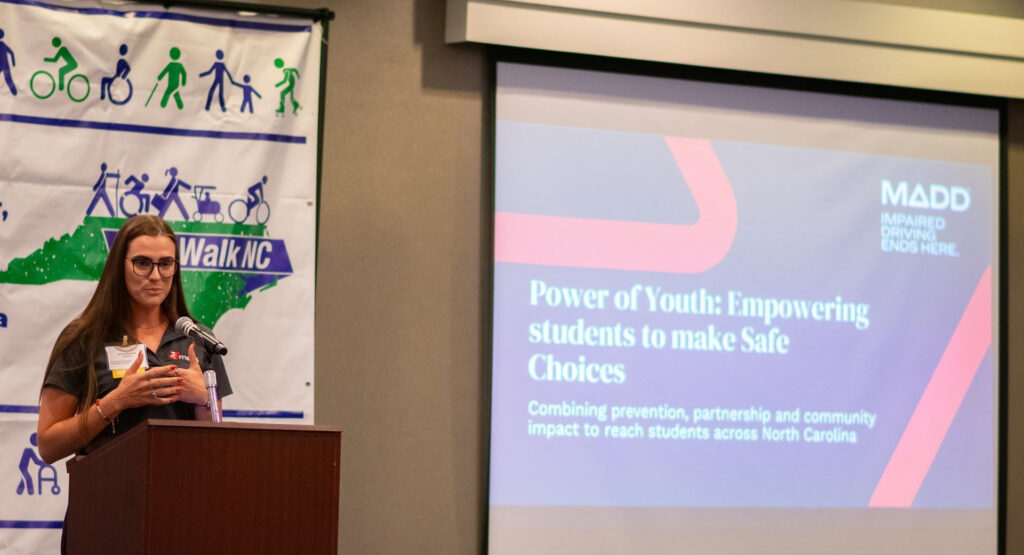
Laura Beckum, State Programs Manager with MADD North Carolina, shared highlights from the organization’s prevention and education efforts. Her presentation explored how school-based programs, community partnerships, and volunteer engagement help educate individuals, encourage safer choices, and strengthen traffic safety efforts across the state.
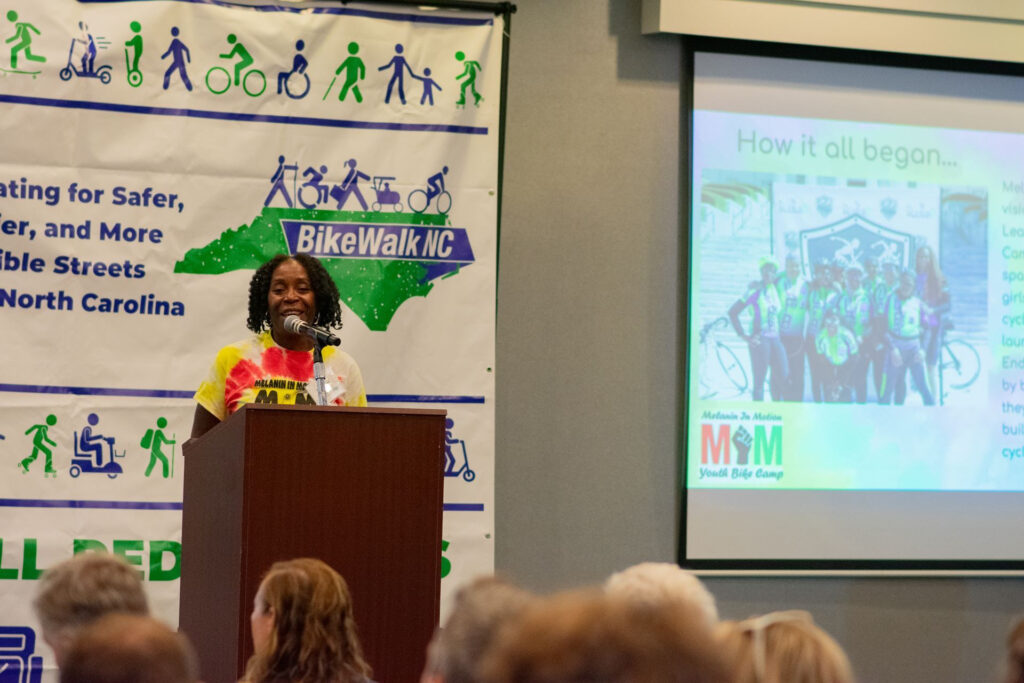
Saundra Lewis of CLT Bike Camp Melanin in Motion shared how a community-led effort launched in 2021 has grown into a program serving youth throughout Charlotte. Created to introduce more Black and Brown girls to cycling, Melanin in Motion provides bicycles, helmets, instruction, mentorship, and outdoor experiences while fostering confidence, leadership, healthy lifestyles, and sisterhood.
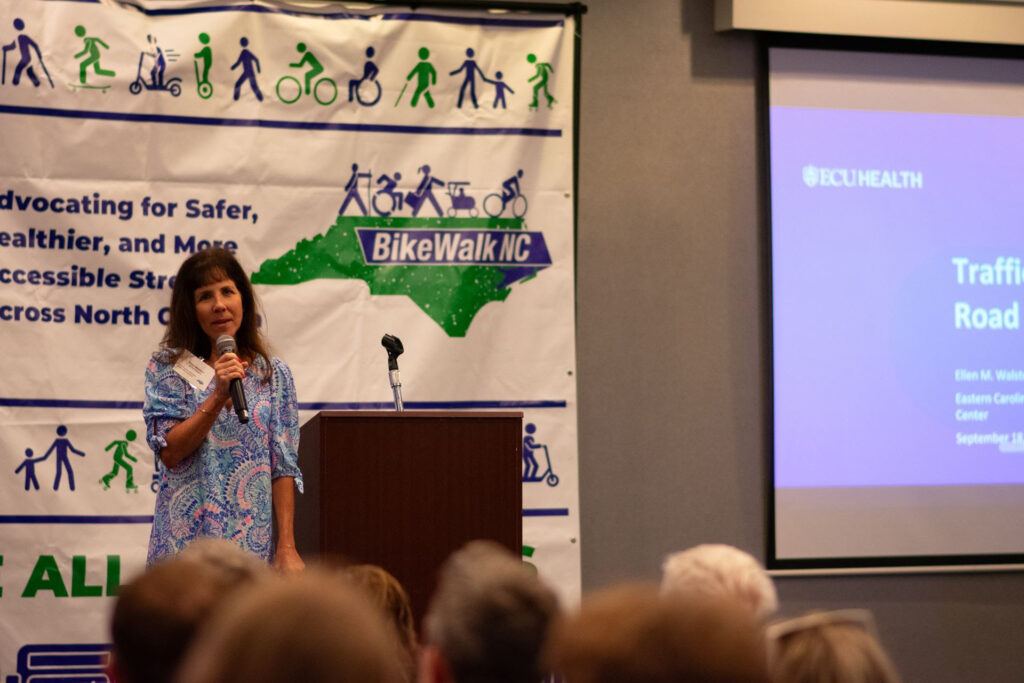
Ellen M. Walston, MSW, ACSW, LCSW, highlighted the development of the Winterville Traffic Garden, a permanent bicycle and pedestrian safety education space made possible through an AARP grant and local partnerships. BikeWalkNC worked with the Town of Winterville, Safe Kids Pitt County, the Pitt County Community Schools & Recreation Program, and community advocates to help bring the project to life. Today, organized activities at the garden give children and families opportunities to learn traffic rules and practice safe walking and biking skills.
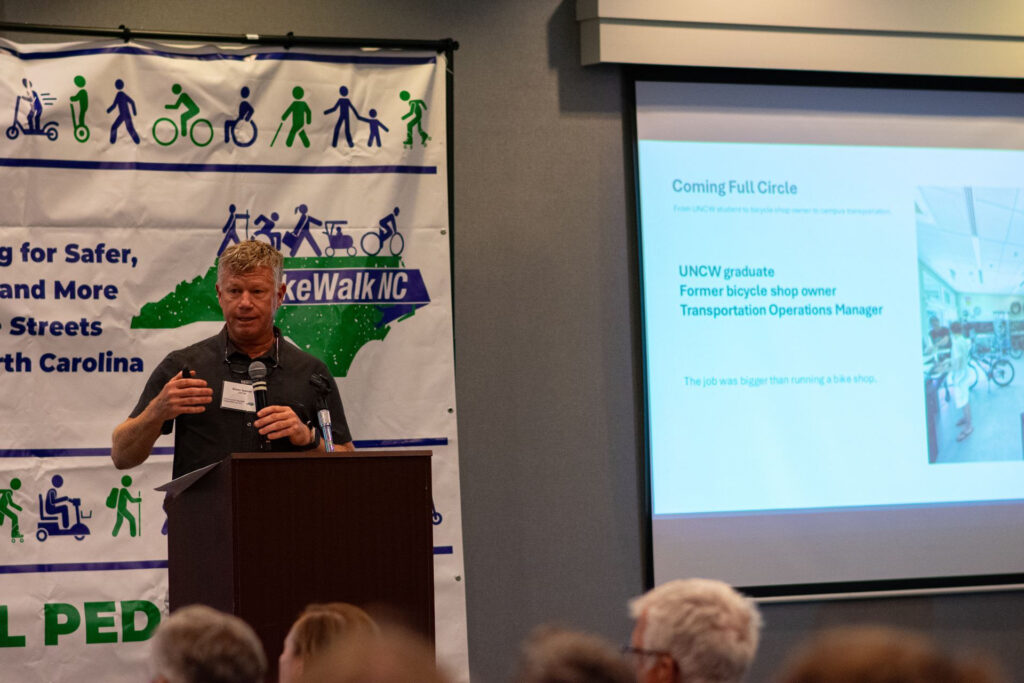
Spencer Shawn of the Hawk Wheels Support Office at UNC Wilmington discussed how a campus bicycle shop is evolving into a broader effort to support transportation independence and bicycle stewardship. Through repair services, registration, bicycle parking management, and community partnerships, the program is helping build a campus culture that supports a range of transportation choices.
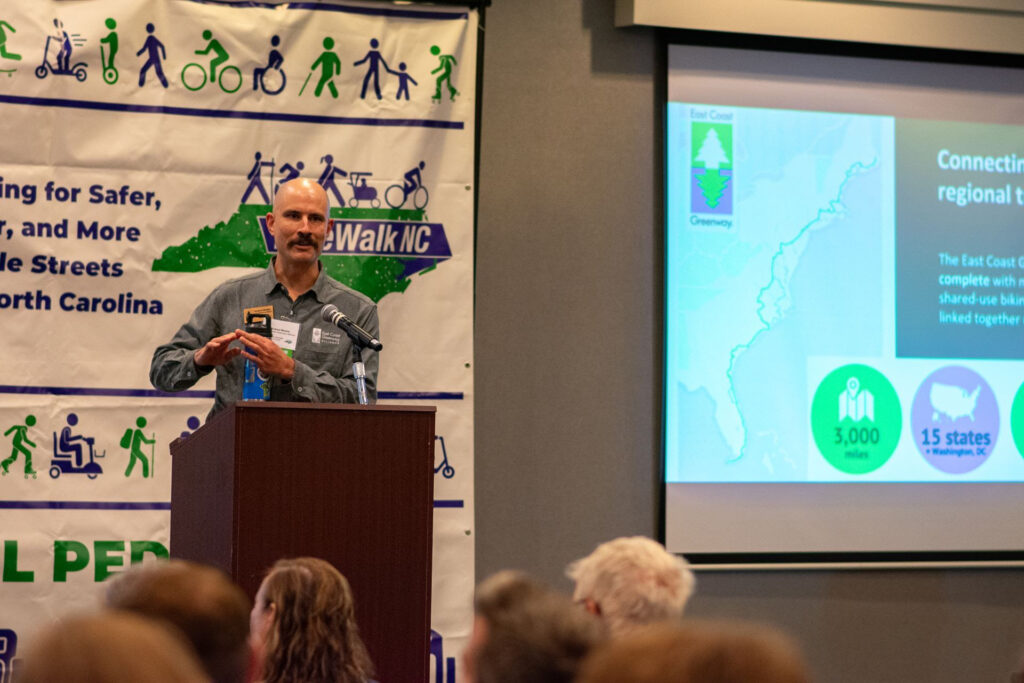
Andrew Meeker of the East Coast Greenway Alliance shared the work underway to develop a four-mile greenway connecting the existing Carolina Beach Island Greenway through Kure Beach to the Fort Fisher Ferry Terminal. Building on a 2024 feasibility study, the project demonstrates how a small coastal town can work with regional partners and multiple levels of government to navigate the challenges of greenway planning and expand access to safe, accessible trails.
Together, these stories demonstrate that progress in transportation safety takes many forms.